

Whether you're new to sugar-free baking or a longtime Lakanto fan, navigating a lineup of sweeteners can feel overwhelming. What's the difference between Classic and Baking Sweetener? When do you reach for allulose vs. erythritol? And what exactly is the Reduced Sugar line? This guide breaks down every Lakanto sweetener — what it's made for, how it performs, and where it shines in your kitchen.
Classic Monkfruit Sweetener with Erythritol

The one that started it all. Lakanto Classic Monkfruit Sweetener is a 1:1 substitute for granulated white sugar, made from a proprietary blend of monk fruit extract and erythritol. It has a clean, neutral sweetness and a granular texture that performs reliably across a wide range of recipes. Unlike processed white sugar, Classic is naturally white — no bleaching required.
One common question: what's the difference between Classic and Powdered Sweetener? Same flavor, different form. Because Powdered is finely milled, it dissolves instantly into frostings and creams, and can be used as a finishing dusting on pastries — applications where granulated sweeteners don't quite work. Learn more in How to Bake with Lakanto Classic Monkfruit Sweetener.
Classic Monkfruit Sweetener works well in: brownies, cookies, cakes, cheesecakes, pies, seasoning blends, sauces, simple syrups, smoothies, oatmeal, and anywhere granulated white sugar is called for.
Classic Monkfruit Sweetener with Allulose

Everything you love about Classic, now powered by allulose. This version swaps erythritol for allulose — a naturally occurring, low-calorie sugar found in small amounts in figs, raisins, and other whole foods — while keeping the same neutral flavor and 1:1 substitution ratio.
The real difference shows up in the oven. Allulose caramelizes and browns the way real sugar does, creates a moist, tender crumb, and produces the kind of chewy texture that erythritol-based sweeteners can struggle to replicate. It also dissolves smoothly without the cooling aftertaste some people notice with erythritol. If baking performance is the priority, this is a compelling upgrade.
Classic with Allulose works well in: cookies, brownies, cakes, muffins, caramel sauces, glazes, cheesecake, simple syrups, and any application where browning, moisture retention, or texture is important.
Organic Monkfruit Sweetener with Erythritol
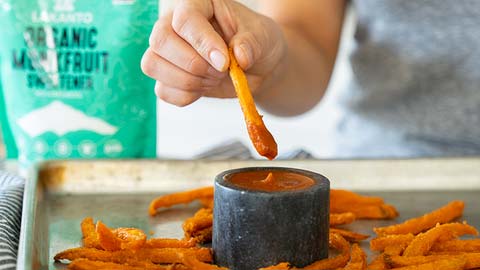
For those who prioritize certified-organic ingredients, this is the option. Lakanto Organic Monkfruit Sweetener has the same taste, granular texture, and 1:1 substitution as Classic — the difference is the certification. Every ingredient goes through rigorous third-party testing, and the organic designation adds an additional layer of verification for quality and sourcing.
All Lakanto products use non-GMO or organic ingredients. Organic Monkfruit Sweetener simply takes that a step further with official organic certification. Learn more here.
Organic Monkfruit Sweetener works well in: the same applications as Classic — brownies, cookies, cakes, cheesecakes, pies, sauces, simple syrups, smoothies, and oatmeal.
Powdered Monkfruit Sweetener

Designed specifically for applications that call for powdered or confectioners' sugar. Lakanto Powdered Monkfruit Sweetener is a fine, smooth blend of monk fruit extract and erythritol that dissolves instantly — no graininess in your frosting, no gritty texture in your glaze. It can also be dusted over finished desserts for a light, decorative finish.
Think of Powdered as Classic with Erythritol's specialty counterpart: same flavor, different purpose. Learn more in How to Bake with Lakanto Monkfruit Sweetener.
Powdered Monkfruit Sweetener works well in: frosting, royal icing, glaze, dusting on baked goods, gelatin, mousse, whipped cream, pie filling, shortbread cookies, sorbet, and ice cream.
Monkfruit Baking Sweetener

Purpose-built for bakers who want sugar-free results that look and behave like the real thing. Monkfruit Baking Sweetener is formulated to dissolve quickly and replicate some of sugar's key functional properties — browning, spreading, and moisture retention — in a way that standard granulated sweeteners don't fully achieve.
It has a powdered-sugar appearance but a flavor closer to white granulated sugar, making it one of the most versatile options in the lineup. Learn more in How to Bake with Lakanto Monkfruit Sweetener.
Baking Sweetener works well in: donuts, brownies, cookies, cake, cheesecake, pie, pastry dough, muffins, gelatin, mousse, whipped cream, ice cream, and sorbet.
Brown Monkfruit Sweetener

A true brown sugar replacement — soft, moist, and packable, just like the real thing. Lakanto Brown Sweetener gets its caramel-like flavor and aroma from natural flavors rather than molasses, making it a clean-label swap that delivers the warm, familiar taste you'd expect from brown sugar.
How does it differ from Golden? Golden is dry and granular with a mapley flavor profile designed to replace raw cane sugar. Brown Sweetener is moist with a caramel-adjacent flavor designed to replace brown sugar — including in recipes where that texture matters. Find out more in 10 Things You Didn’t Know about Lakanto Brown Monkfruit Sweetener.
Brown Monkfruit Sweetener works well in: cookies, pies, cinnamon rolls, sauces, marinades, meat glazes, and any recipe that calls for brown sugar.
Golden Monkfruit Sweetener with Erythritol

Lakanto Golden Monkfruit Sweetener is designed to replace raw cane sugar — also called turbinado or Demerara — with a 1:1 substitution ratio. Its golden color comes naturally from different parts of the monk fruit, and it carries a warm, mapley complexity that sets it apart from Classic's more neutral flavor profile. The crystal is finer than typical raw cane sugar, so it dissolves just as easily while still delivering that distinct depth of flavor. Learn more in How To Bake With Lakanto Golden Monkfruit Sweetener.
Golden Monkfruit Sweetener works well in: cookies, brownies, cakes, pies, muffins, cinnamon rolls, scones, biscuits, sauces, salad dressings, dry rubs, meat glazes, marinades, simple syrups, smoothies, and coffee or tea.
Golden Monkfruit Sweetener with Allulose
Golden's mapley warmth, now with the functional advantages of allulose. This version replaces erythritol with allulose for improved caramelization, better moisture retention, and that slightly crispy-on-the-outside, chewy-on-the-inside texture that makes baked goods irresistible. Same golden flavor profile, same 1:1 substitution for raw cane sugar — just with noticeably better baking performance.
If you love baking with Golden and want results that get even closer to what traditional raw cane sugar delivers, this is worth trying. It's especially well-suited to recipes where caramelization or a rich, glossy finish is part of the outcome.
Golden with Allulose works well in: cookies, banana bread, spiced cakes, muffins, cinnamon rolls, caramel sauces, glazes, marinades, and any recipe where Golden's flavor profile pairs naturally with the need for browning and moisture.
Reduced Sugar Sweeteners: Real Sugar, Amplified by Monk Fruit
The Reduced Sugar line represents something new in the Lakanto lineup: a bridge for people who want to cut back on sugar without eliminating it entirely. Each blend pairs a familiar, recognizable sugar with monk fruit extract — so the monk fruit does more of the sweetness work, and you use significantly less product overall.
The substitution ratio: because these blends are more concentrated in sweetness, you only need ⅓ cup to replace 1 cup of regular sugar. The result is real sugar flavor with meaningfully less sugar per serving — no dramatic taste adjustment, no unfamiliar ingredients.
All three varieties use the same 1:3 ratio, making them easy to incorporate into existing recipes.
Coconut Sugar with Monk Fruit

Coconut sugar is prized for its deep, caramel-toffee character and its lower glycemic index compared to refined sugar. This blend pairs it with monk fruit to concentrate that distinctive flavor, so a smaller amount goes further. You get everything that makes coconut sugar worth using — the earthy, layered sweetness, the natural color — with less sugar overall.
Particularly well-suited to recipes where coconut sugar's flavor is an intentional part of the dish rather than just background sweetness.
Coconut Sugar with Monk Fruit works well in: granola, energy balls, oat cookies, banana bread, smoothies, coffee, chai, spiced baked goods, sauces, and curry-inspired dishes.
Substitution ratio: Use ⅓ cup to replace 1 cup of coconut sugar or regular sugar.
Cane Sugar with Monk Fruit

The most straightforward entry point into the Reduced Sugar line. Lakanto Cane Sugar with Monk Fruit looks, pours, and bakes like familiar white granulated sugar — because it starts with real cane sugar — but with monk fruit amplifying the sweetness so you can use a fraction of the amount. For households that aren't ready to go fully sugar-free but want a simple, sustainable way to reduce, this is the most seamless swap available.
No dramatic flavor shift. No new techniques. Just less sugar, used the same way.
Cane Sugar with Monk Fruit works well in: everyday baking, coffee and tea, oatmeal, dressings, sauces, and marinades — anywhere you currently reach for white granulated sugar.
Substitution ratio: Use ⅓ cup to replace 1 cup of white cane sugar.
Date Sugar with Monk Fruit

Date sugar brings a naturally rich, almost caramel-like sweetness with the nutritional profile of whole fruit — and this blend makes it go further. Lakanto Date Sugar with Monk Fruit pairs the depth and warmth of dates with monk fruit for a sweetener that works hard in wholesome, minimally processed recipes. The texture is finer than traditional date sugar and dissolves more easily, making it more versatile across applications.
A strong choice for anyone building recipes around whole-food, natural ingredients without compromising on sweetness or flavor complexity.
Date Sugar with Monk Fruit works well in: cookies, energy balls, date-sweetened cakes and bars, smoothies, overnight oats, spiced baked goods, and recipes that lean into warm, natural sweetness.
Substitution ratio: Use ⅓ cup to replace 1 cup of date sugar or regular sugar.

Ready to stock up? Head to the sweeteners page to find the right fit for your kitchen. And for deeper baking guidance, printable Baking Guide — featuring insights from expert chefs Vanessa Musi, Blaire Flory, and Angelina Papanikolaou on how to get the best results from every sweetener in the lineup.
3 comments
Thanks for the overview. I’m loving these products for making treats for my kids that I don’t have to regret giving them😁
Is there a way to get pure monk fruit without allulose or erytherol?
Both have questionable side effects.
Thanks- Sue
I only use Monk Fruit now. I love it.